Comparison reports between Curcuma Caesia Roxb. and other Curcuma species

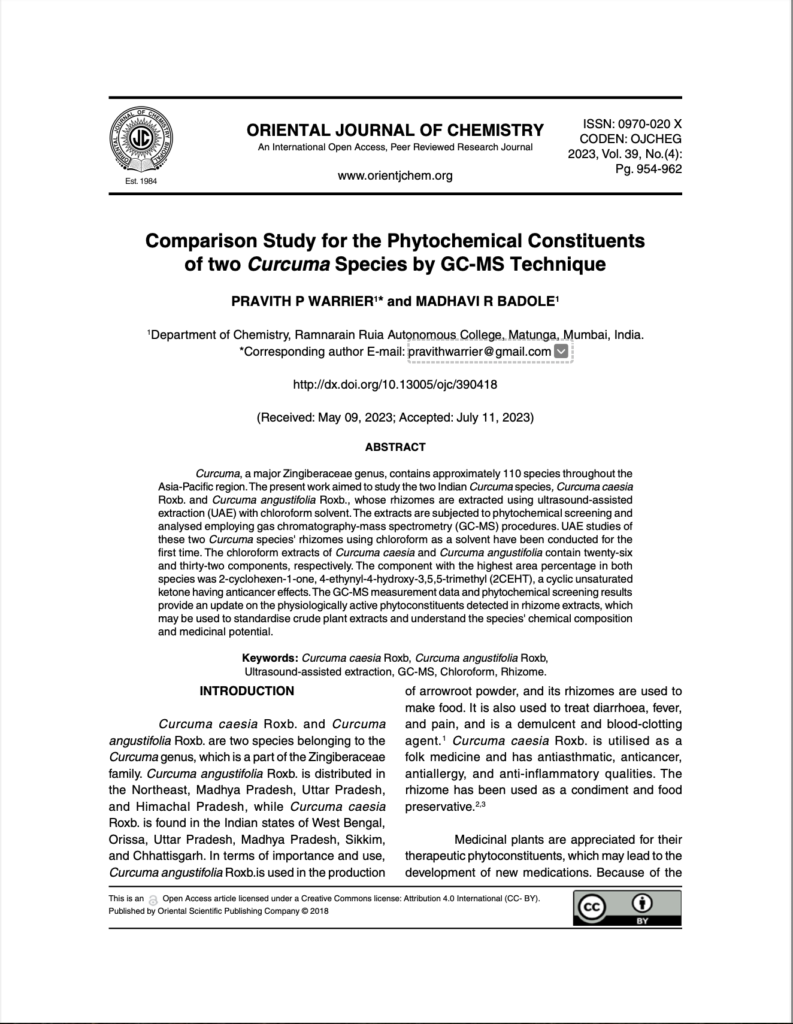
1) Curcuma caesia (black turmeric) and Curcuma angustifolia.

This study compared the chemical constituents of the rhizomes of two Indian turmeric species, Curcuma caesia (black turmeric) and Curcuma angustifolia, using ultrasound-assisted extraction (UAE) with chloroform and GC-MS analysis. Phytochemical screening showed that both species contain terpenoids, steroids, phenolic compounds, and cardiac glycosides, while tannins, alkaloids, flavonoids, and amino acids were absent. GC-MS identified 26 compounds in C. caesia and 32 compounds in C. angustifolia. In both plants, the major compound was 2-Cyclohexen-1-one, 4-ethynyl-4-hydroxy-3,5,5-trimethyl (2CEHT), which is known for anticancer activity. Several other compounds with antimicrobial, anti-inflammatory, antioxidant, and medicinal properties were also detected. The study shows that UAE is an efficient extraction method and confirms that both Curcuma species are valuable sources of bioactive compounds with potential use in herbal medicines and drug development.


2) Curcuma longa (yellow turmeric) and Curcuma caesia (black turmeric)

This study compared the chemical composition and antioxidant and anti-inflammatory activities of the rhizomes and leaves of Curcuma longa (yellow turmeric) and Curcuma caesia (black turmeric) using GC-MS, FTIR and in-vitro biological assays. The results showed that both species contain a wide range of bioactive phytochemicals with known medicinal properties, with black turmeric rhizomes containing higher levels of certain important compounds such as methyl stearate, glycidyl oleate, curcumenol and eucalyptol. Antioxidant and anti-inflammatory tests demonstrated that the rhizomes of C. caesia have activities comparable to C. longa, while the leaves of both species also showed strong biological activity similar to their rhizomes. Overall, the study highlights that black turmeric is an underutilized medicinal plant and that turmeric leaves, not just rhizomes, have significant potential for medicinal, food, cosmetic and pharmaceutical applications.